
Site Selection – Building the Foundation for Wastewater Surveillance for Pandemic Prevention
Global Advances and Malaysia’s Experience in Wastewater Surveillance
After the SARS-CoV-2 pandemic, global focus shifted to the development of tools for pandemic prevention and disease monitoring. Wastewater surveillance has emerged as a highly compelling approach. It fills the critical gaps left by traditional surveillance systems, which depend largely on individuals seeking testing or medical care, and enables the detection of infections among asymptomatic carriers. By detecting pathogen signals shed by the population, wastewater surveillance provides early insights into potential disease trends at the community level.
Importantly, these advances are not limited to high-income countries, but are also feasible in low- and middle-income settings. In Malaysia, the public health laboratories have actively implemented wastewater surveillance for pathogens such as polio and SARS-CoV-2. Universiti Malaya and Universiti Malaysia Sarawak of the WaSPP consortium are expanding national efforts to include other emerging and re-emerging diseases with pandemic potential.
Finding the Right Flow
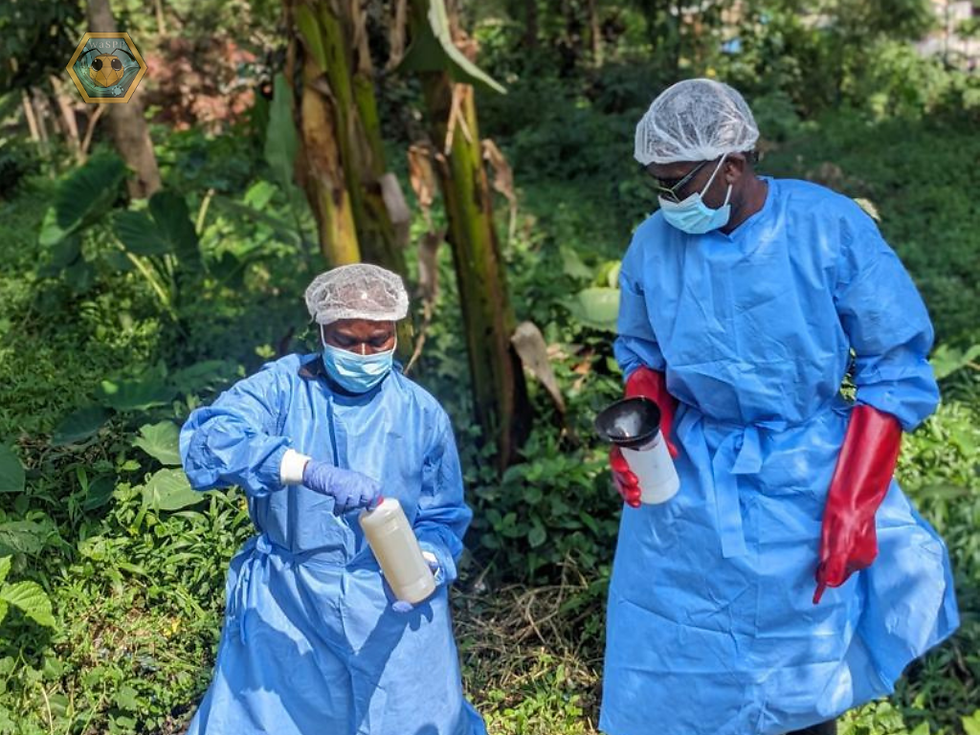
A key task was to identify suitable sites for routine sampling, with the team choosing to focus on wastewater treatment plants (WWTPs). Unlike decentralised sites such as rivers and manholes, their influent is representative of the population and comes from a defined, identifiable catchment area. Sampling from WWTPs enables standardised and longitudinal monitoring of viral shedding at a community level and reflects epidemiological trends.
However, it has not been easy for the team in Malaysia to identify which WWTPs are logistically feasible and epidemiologically representative as sampling sites for wastewater surveillance. This is because Malaysia is geographically divided into Peninsular (West) Malaysia and the Borneo states, collectively known as East Malaysia and across Peninsular Malaysia, there are over 7,000 WWTPs. Therefore, to select WWPT sites, the team engaged with multiple state-run Sewerage Services Departments in the respective regions to gain insight into local infrastructure and environmental conditions. This provided an in-depth understanding of how wastewater systems function in each state. From this, a method was developed for the selection of WWTPs based on data profiles including catchment size, existing surveillance activity and disease risk mapping from publicly available information.

Operational Insights from WWTP visits
To understand operational realities on the ground, site validation visits were arranged with seven different WWTPs in Kuala Lumpur managed by the Indah Water Konsortium. From this, the team learnt how plants are managed, with clean and well-maintained environments allowing for efficient wastewater processing and treatment.
The plants shared similar peak‑flow windows, and understanding this pattern was essential for the WaSPP team. It allowed the team to coordinate sampling schedules across Kuala Lumpur so that collections occurred during the periods of highest faecal loading, when wastewater is most representative of community health. Aligning these peak times also helped to streamline logistics, ensuring samples could be transported back to the laboratory and processed quickly, which is essential for generating high‑quality, actionable data.
A collection of photographs from visits with the State Health Department, Sabah, briefings on wastewater collection and Penanbang WWTP, with a view of Mount Kinabalu in the background
The WaSPP team's visit to the Penampang WWTP in Sabah was not only technically insightful but also visually memorable due to the incredible views of Mount Kinabalu. The plant is the largest in Sabah and serves a catchment population of over 350,000. The team were able to observe the effluent disinfection system, which used activated chlorine to disinfect treated wastewater before discharge. This allowed the team to gain an operational understanding of the treatment pipeline and plan timings for sample collection.
Coordination for Impact
Streamlining site selection across multiple state-run and regional sewerage services departments was challenging due to differences in governance structures and approval processes, requiring sustained and tailored engagement. The team in Malaysia were encouraged that both the Sewerage Services Department and the State Health Department showed strong interest in WaSPP and recognised wastewater surveillance as a practical and cost-effective complement to traditional surveillance and an early warning tool for disease outbreaks. They are grateful for the strong collaboration with personnel at each treatment plant, whose cooperation, commitment, and professionalism will play a key role in ensuring efficient sample collection across the sites.
Through close engagement with local partners, the WaSPP team has now finalised the sites that will be routinely sampled for priority pathogens, with collections planned across West and East Malaysia every two weeks for the coming two years. This sustained sampling will generate a consistent stream of data to track trends, detect early signals, and refine the understanding of pathogen circulation. Throughout the pilot phase, they will continue working closely with public health agencies and wastewater treatment plants to strengthen coordination, troubleshoot operational challenges, and ensure that wastewater surveillance is positioned to integrate seamlessly into national surveillance programmes as a long‑term public health asset.
Authors:
Ahmad Asyraf Senian, Faculty of Medicine and Health Sciences, University Malaysia Sarawak (UNIMAS), PhD Student
Elaine Yee Ling Ng, Faculty of Medicine, Universiti Malaya (UM). Postdoctoral Research Fellow


Comments