
Spotlight on Filoviridae: Overview, Research and Development
Updated: Jul 22
By Tresor Kabeya, MD, MMed, MSc
Fifty years ago, a headmaster at Yambuku Mission School returned from a trip to northern Zaire (now the Democratic Republic of the Congo). Shortly afterwards, he developed chills and persistent fever and two weeks later, he died from what was then an unexplained viral haemorrhagic illness. In September that same year, Ebola virus disease was first identified during two simultaneous outbreaks: the Yambuku outbreak in the Democratic Republic of Congo (then Zaire), and the Nzara outbreak in Sudan (now South Sudan).
The Filoviridae family
Viral haemorrhagic fevers such as Ebola constitute a significant burden on public health systems. Several pathogens are implicated, including the viruses from the Filoviridae family, as well as viruses from the Arenaviridae family (such as Lassa virus) and the Nairoviridae family (Crimean-Congo haemorrhagic fever virus (CCHFV)).
The Filoviridae family contains sixteen viruses grouped into eight genera. Among these, the genus Orthoebolavirus includes several viruses capable of causing severe disease in humans, including Ebola virus, Sudan virus, and Bundibugyo virus (which have been responsible for multiple high-consequence outbreaks), Taï Forest virus "Ivory Coast", Reston virus, and Bombali virus.
Although filovirus outbreaks are sporadic, they are often characterised by a high case fatality rate ranging from approximately 30% up to 90%, depending on the virus involved and the circumstances of the outbreak. The viruses most frequently associated with human outbreaks are Ebola virus and Sudan virus. No human infections have been documented for the Reston virus, while only one human case of Taï Forest virus was reported in 1994.

Ebola Outbreaks
Since 1976, more than 25 outbreaks of Ebola disease and Sudan virus disease have been reported, affecting over 30,000 people. The largest Ebola outbreak recorded was the West Africa Ebola epidemic (2013-2016), which was caused by Ebola virus (Zaire Ebola virus species), resulting in more than 28,000 cases and over 11,000 deaths.
The most recent outbreak of Ebola disease in the Democratic Republic of the Congo and Uganda, on the other hand, is caused by Bundibugyo virus. The virus was first identified in 2007 during an outbreak of viral haemorrhagic fever in the Bundibugyo district of Uganda, on the border with the DRC. Bundibugyo virus causes the same severe haemorrhagic disease in humans and has a case fatality rate comparable to those reported for some Ebola disease outbreaks. Unlike Zaire Ebola virus, for which licensed vaccines are available and have been deployed extensively during recent outbreaks, there is currently no approved vaccine specifically for Bundibugyo virus, making outbreak control reliant on surveillance, case isolation, and supportive clinical care.
Just over two months after the official outbreak declaration in May 2026 by the World Health Organisation (WHO), the Institut National de Santé Publique of the Democratic Republic of the Congo reported 2344 confirmed cases, including 930 confirmed related deaths (as of 18th July 2026).
The DRC has experienced more Ebola outbreaks than any other country, recording sixteen outbreaks caused by Ebola virus since 1976, including one caused by Bundibugyo virus in Isiro Province in 2012. The current outbreak, declared in May 2026, is the country's seventeenth outbreak and is affecting the provinces of Ituri, Nord-Kivu, and Sud-Kivu, also linked to Bundibugyo virus.
The ongoing Bundibugyo virus disease (BVD) outbreak is affecting areas with fragile security conditions, making it particularly challenging for public health response teams by limiting access to affected communities and hindering the implementation of adequate public health interventions.
Tackling the Bundibugyo virus
In response to the outbreak, the National Institute of Biomedical Research (INRB) team has deployed field-based diagnostic laboratories, bringing critical testing services closer to affected communities. This rapid deployment reflects years of investment in genomic sequencing and genomic surveillance capacity, supported by international partnerships, collaborative research projects, and the dedication and expertise of the INRB team.

The first genomic sequencing of the Bundibugyo virus by INRB provided genomic evidence of a new case of interspecies transmission, confirming a new zoonotic spillover event. Since zoonotic spillover events are responsible for over 70% of emerging infectious diseases (EIDs), detecting these events early is critical to preventing future outbreaks.
Looking forward
Faster testing and enhanced surveillance are critical to understand the virus dynamics and host interactions. Wastewater surveillance is increasingly recognised as a valuable tool for early detection of outbreaks, complementing traditional clinical surveillance and detecting viruses shed by those who are asymptomatic or have not yet sought healthcare.
Professor Placide Mbala Kingebeni, Director, Clinical Research Centre of the National Institute of Biomedical Research and Principal Investigator of the WaSPP project in DRC shares:
“Our experience with wastewater surveillance during the Mpox outbreak, combined with the context of the recent Ebola outbreak in the DRC, demonstrates that integrating environmental surveillance—through wastewater monitoring and analysis—could enable early detection and rapid, proactive control of diseases with pandemic potential in the country.”
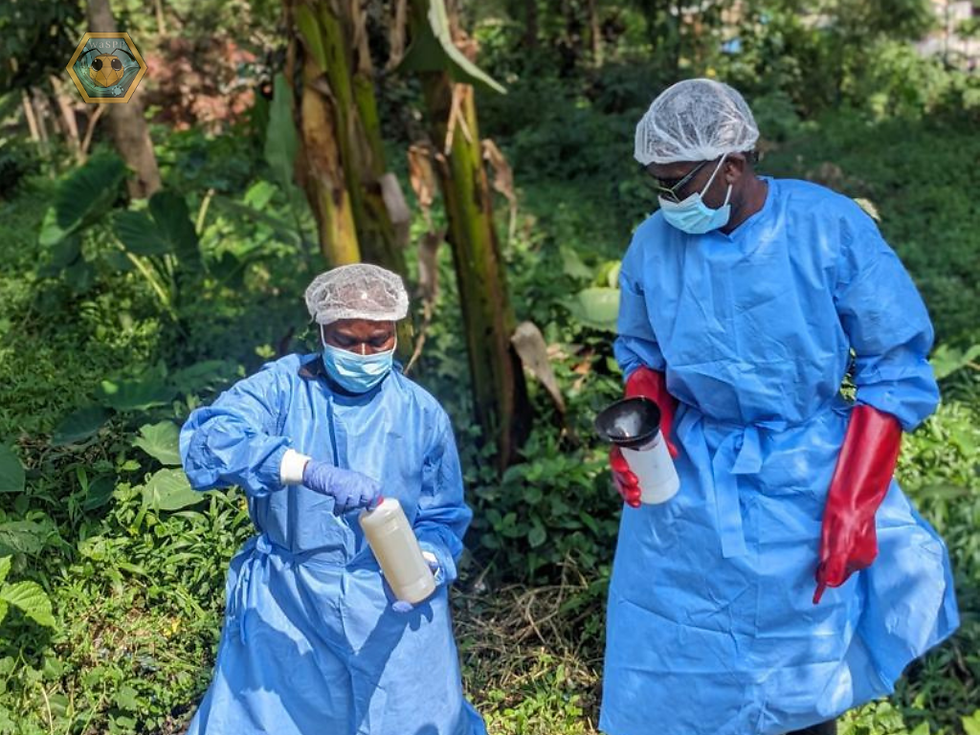
Since there are no approved vaccines to prevent BVD and no approved treatments, integrating genomic sequencing, rapid field diagnostics, and innovative surveillance approaches such as wastewater monitoring can help public health authorities identify threats earlier, respond more effectively, and reduce the risk of local outbreaks escalating into regional or global health emergencies. However, continued investment in these capabilities will be essential to improving health security and building resilience against future epidemics and pandemics.
About the Author
Tresor Kabeya, MD, MMed, MSc is a researcher in medical microbiology and molecular biology for WaSPP and the National Institute for Biomedical Research, INRB, Kinshasa, Democratic Republic of the Congo


Comments